

On August 10, 2026, Colombia came to a standstill. A 7.4-magnitude earthquake shook the western and central parts of the country. In a matter of seconds, everyday life gave way to uncertainty. Buildings shook, families poured into the streets, hospitals activated emergency protocols, and in many homes and communities, darkness fell without warning.
Amid the chaos, there is one thing that must continue to function—or be restored as soon as possible: electricity. Not as a convenience. As a necessity for life.
Why is electricity the first utility people want to have restored?
When it comes to disaster response, the conversation often revolves around water, food, and shelter. But there is one element that makes it all possible and is rarely given the attention it deserves: electricity.
Without electricity:
• Hospitals cannot keep operating rooms running, maintain life-support equipment, or preserve the cold chain for medications.
• Telecommunications are disrupted, and with them, the coordination of rescue teams.
• Water pumps stop working.
• Communities lose access to information and the ability to communicate with their families.
• Emergency shelters cannot provide lighting or basic heating.
• Electricity is not a luxury in an emergency. It is the backbone of the entire humanitarian response.
A hospital with power can save lives. A hospital without power becomes yet another problem.
Those who work behind the scenes: emergency electrical crews
While cameras follow the rescue teams, there is another group of people who also enter the affected areas right from the start: power grid workers.
Their work is invisible to most, but essential for everyone. They assess damage to transmission and distribution lines, identify affected transformers, prioritize which substations to restore first, and coordinate with grid operators to safely restore service—without creating new risks in infrastructure that may have been compromised.
The order in which power is restored is not random. It follows a technical and humanitarian logic:
1. Hospitals and health centers: these are the top priority. Many have emergency generators, but these have limited runtime.
2. Emergency operations centers: Civil Defense, the Red Cross, and the Fire Department need communications and power to coordinate their efforts.
3. Water and sanitation systems: treatment and pumping plants depend on electricity.
4. Shelters and densely populated residential areas: where the largest number of people have taken refuge.
Every decision involves a risk assessment: Which power line can I restore first without compromising the safety of workers or residents?
What happens to the electrical infrastructure when there’s an earthquake?
An earthquake does more than just shake the ground. It subjects electrical infrastructure to forces it was not always designed to withstand, especially when the event exceeds the magnitudes considered in the area’s seismic risk studies.
The most common effects on electrical grids include:
• Fallen utility poles and overhead lines, especially on slopes or in areas with soft soil.
• Damage to distribution transformers, which may become displaced, suffer broken connections, or experience dielectric oil leaks.
• Outages at substations, where protective equipment automatically activates to prevent further damage.
• Damage to underground networks, which are more difficult to detect and repair than overhead lines.
Restoring service is not as simple as “turning the power back on.” Each section of the network must be inspected, assessed, and certified as safe before it can be energized. A short circuit in an already damaged network can cause fires in areas where emergency crews are already dealing with multiple incidents.
Technical fact: Distribution transformers are among the most vulnerable pieces of equipment during high-intensity earthquakes. Proper preventive maintenance and earthquake-resistant design are key factors in the resilience of electrical grids during natural disasters.
Energy Resilience: The Lessons We Learn from Natural Disasters
Every emergency also provides a snapshot of the state of the infrastructure. Areas with more modern, better-maintained networks and greater design redundancy are the ones that restore service the fastest.
Energy resilience cannot be improvised. It is built before a disaster strikes, through technical and investment decisions that are sometimes invisible until the ground shakes:
✔ Preventive maintenance of transformers and power lines.
✔ Designing grids with redundancy so that if one circuit fails, there is an alternative path.
✔ Clear response and prioritization protocols.
✔ Backup equipment at critical facilities.
✔ Investment in infrastructure that meets earthquake-resistant standards.
Colombia has made significant progress along this path. But events like the one on August 10, 2026, remind us that the resilience of an electric grid is never complete—there is always something else that needs to be strengthened.
Those who keep the lights on when everything goes dark
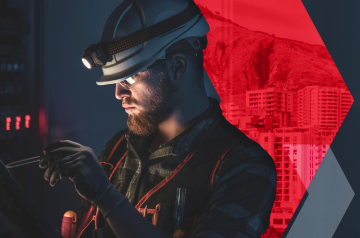
There’s an image that rarely appears in the news after an earthquake: that of an electrician working in the early morning hours in an area without power, wearing a hard hat and carrying a flashlight, checking that a substation is safe before restoring service to an entire neighborhood.
They aren’t named in the headlines. But they play a vital role.
They are the field engineers, the grid operators, and the technicians from energy companies who head out to work precisely when most people are waiting at home or in a shelter. Their work is what makes it possible for a hospital to continue operating, for a family to charge their cell phone to check on their loved ones, and for a community to turn on a light and begin to get organized.
In emergencies, electricity isn’t the problem. It’s part of the solution, and there are people who make that possible.
Stay strong, Colombia
August 10, 2026, was a difficult day. And the days ahead will require hard work, patience, and solidarity. At Tesla Transformadores, we stand with everyone working to get Colombia back on its feet: rescue teams, power grid workers, volunteers, and communities coming together to help one another.
The energy that powers this country doesn’t just come from the power lines. It comes from its people. Want to help? The Colombian Red Cross has set up its official donation channels at www.cruzrojacolombiana.org
We transform sustainable energy.

